
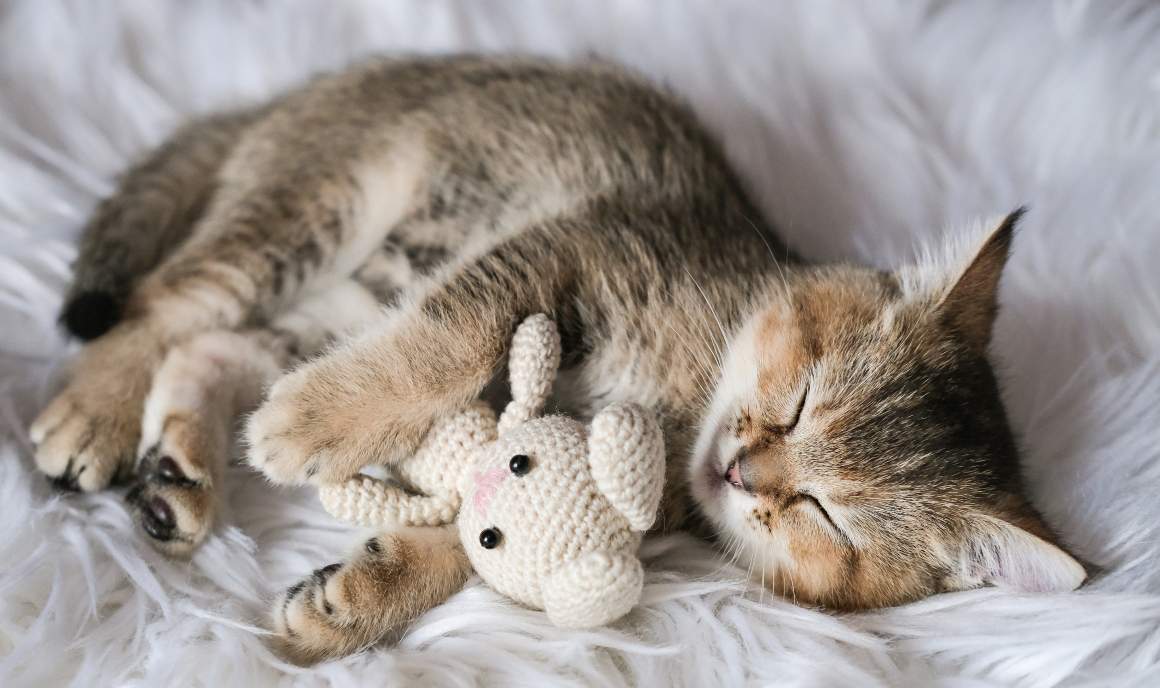
If you own a cat, you’ve probably pondered why your pet sleeps for extended periods of time.Although cats are known for loving to nap, how much sleep do they actually need?
And what can you learn about a person’s personality, temperament, and health from the way they sleep?
We’ll look at some fascinating information and advice on your cat’s sleeping cycles and behaviours in this post.
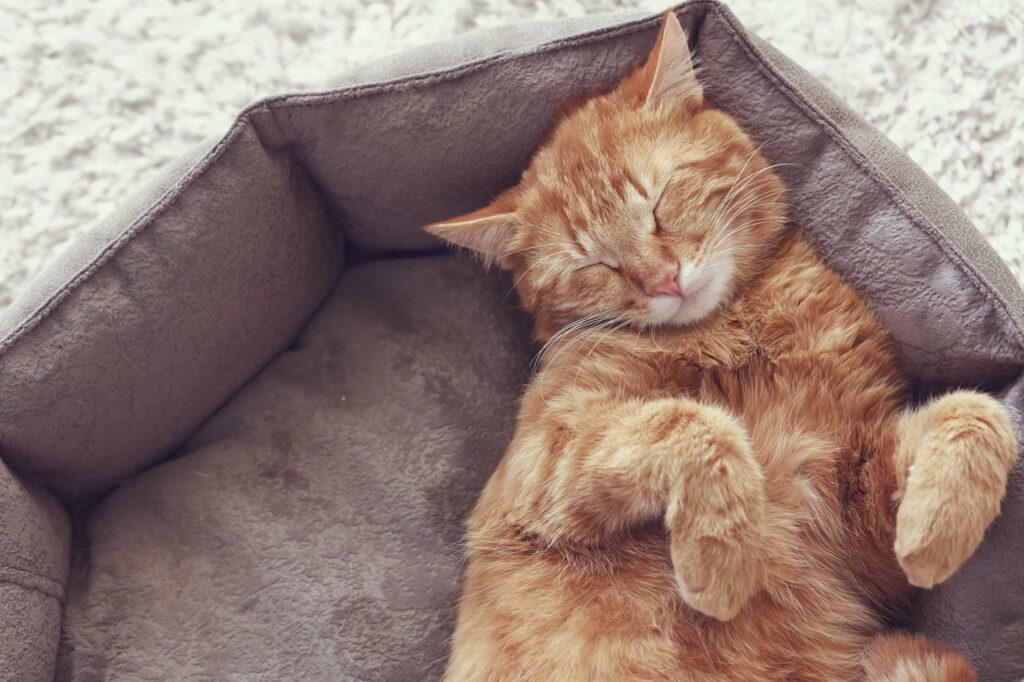
The Polyphasic Sleep Pattern of Cats
Cats sleep at many periods throughout the day as opposed to the one, prolonged sleep that humans typically experience due to their polyphasic sleep pattern.
The duration of these cat naps ranges from 50 to 113 minutes, with an average of 78 minutes. Since cats sleep for almost two thirds of their lives, a cat that is fifteen years old has slept for ten years.
Older cats can sleep up to 203 hours a day, but younger cats usually sleep 16 hours.
Cats’ extensive sleeping patterns can be attributed to their physiology, diet, and evolutionary history.
Cats must hunt in order to survive in the wild, and the process of tracking, pursuing, and killing prey requires a lot of energy. Cats who sleep a lot are able to preserve energy
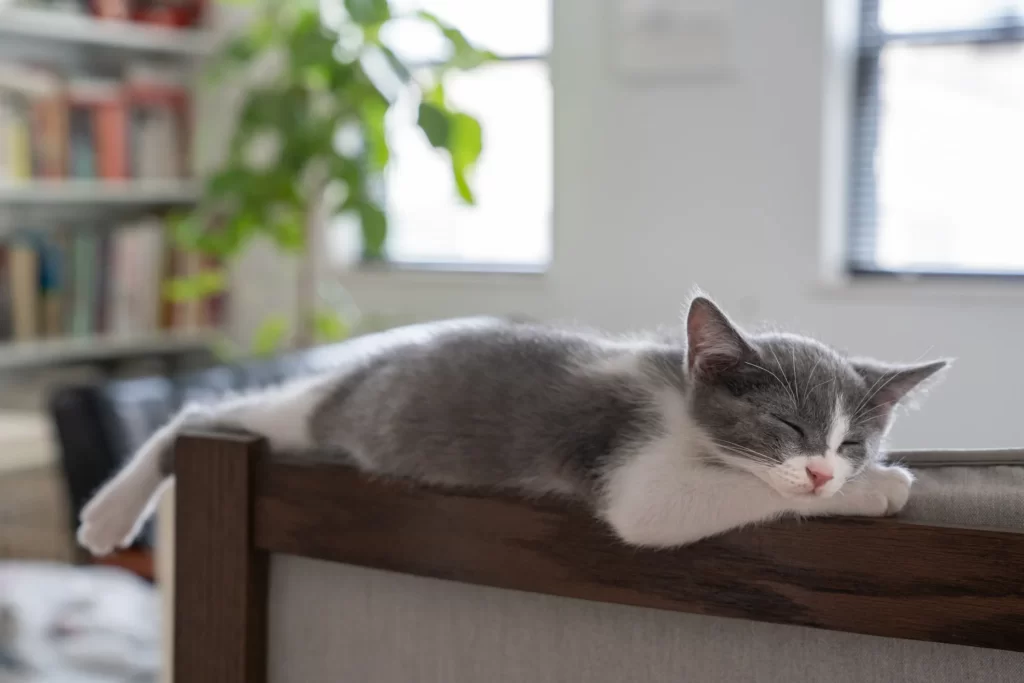
How the Circadian Rhythm Affects Cat Sleeping Behaviour
The internal body clock that regulates the 24-hour cycle of sleep and wakefulness is known as the circadian rhythm.
Humans have a diurnal circadian rhythm, which means that we tend to sleep at night and stay up during the day by nature. But cats are crepuscular.
They are most active in the early morning, just before sunrise, and in the late afternoon, right before dusk.
It is hypothesised by researchers that the predatory instinct of cats drives their crepuscular sleep cycle.
Animals that cats frequently prey on have distinct sleep cycles. Due of its crepuscular nature, cats can feed on nocturnal rodents during twilight and rise up at dawn to prey on nocturnal birds.
This also clarifies why your cat could keep you up at night or wake you up in the morning.
The Different Stages of Cat Sleep: NREM and REM
Like humans, cats go through phases of sleep that are similar to each other.
Sleeping cats have both rapid eye movement (REM) and non-REM sleep1. Your cat might be soundly asleep during NREM sleep and alert to wake at any time.
Your cat can be dreaming when in a deep sleep during REM sleep. When your cat’s eyelids are closed and their body or face twitches, you can determine that they are in REM slumber.
In cats, REM sleep makes up 40% of their sleep, while NREM sleep makes up the remaining 60%. Humans, on the other hand, sleep for roughly 75% of the time in NREM sleep and 25% in REM sleep.
It’s possible that cats require greater REM sleep, which accounts for this disparity.
What Cat Sleeping Positions Reveal About Their Mood and Personality
Your cat’s sleeping habits might reveal a lot about their emotions and opinions of you. The following list of typical cat napping positions and their meanings:
- Curled up: The most popular sleeping position for cats is this one. It aids in body heat conservation and shields their important organs from possible attackers. It also demonstrates how at ease and safe people feel in their surroundings.
- Having your belly up is a show of confidence and ease. Your cat lets you see their exposed tummy, a sign that they are comfortable and confident in your company. When they become overheated, it also aids in their cooling down
- Loaf: Your cat will sit up straight and tuck its paws under its body during this behaviour. It appears that they are prepared to act at any moment.
- It demonstrates that kids are aware of their environment and inquisitive. Side sleeper: Your cat will stretch their legs out when they lie on their side.
- It demonstrates how at ease and satisfied
- Back sleeper: Your cat will lie on their back with their legs raised. They may even curl up with you or another cat in this posture.
- It demonstrates their confidence and playfulness. In this position, they might also allow you to pet their tummy or play with their paws.
How Age, Health, and Environment Influence Cat Sleeping Habits
Although cats generally sleep a lot, there are few things that can change how much and how soundly they sleep. These consist of:
- Age: Cats typically sleep deeper and longer as they get older. This is a result of their decreased energy and increased need for sleep to be healthy. Additionally, the circadian rhythms of older cats may alter, causing them to be less active during the day and more active at night.
- Health: When cats are ill or injured, they may sleep more or less than usual. Sleeping less might be an indication of pain or discomfort, while sleeping more can aid in their healing and recovery. To rule out any medical concerns, you should speak with your veterinarian if you observe any changes in your cat’s sleeping patterns.
- Environment: Cats are sensitive to variations in the light, noise, temperature, and presence of humans in their surroundings. Their quantity and quality of sleep may be impacted by these. For instance, cats may sleep less in bright or sunny weather and more in cold or rainy weather. Additionally, cats tend to sleep less when they are active or excited and more when they are bored or anxious.
FAQS
How much do cats sleep in a day?
Cats sleep, on average, between 12 to 16 hours a day. However, this can vary based on the cat’s age, health, and lifestyle.
Why do cats sleep so much?
Cats are natural hunters, and their sleep patterns reflect their hunting instincts. They sleep a lot to conserve energy for hunting, as well as to stay alert during their active periods.
Do cats sleep more as they get older?
Yes, older cats tend to sleep more than younger cats. Senior cats, in particular, can sleep up to 20 hours a day. This increased sleep is often due to a decrease in their energy levels and activity.
Can a cat’s sleeping habits indicate their health?
Yes, changes in a cat’s sleeping patterns can be indicative of health issues. If a cat suddenly starts sleeping significantly more or less than usual, it might be a sign of illness, stress, or discomfort. Consulting a vet is advisable in such cases
Conclusion
Cats are amazing animals with unusual sleeping routines and behaviours. You may enhance your cat’s pleasure and well-being and gain a deeper appreciation for their unique personality and behaviour by knowing how and why they sleep. Always remember to honour your cat’s desire for sleep and give them a comfortable space to relax in. Remember to savour the snuggles and purrs as they awaken as well !
Originally posted on May 11, 2026 @ 1:56 pm