
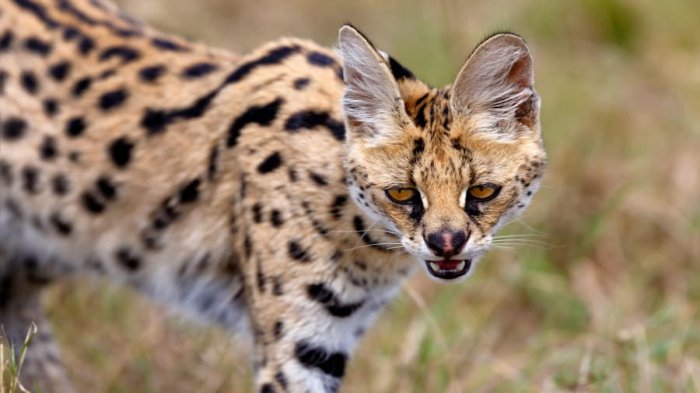
African wild cats are known as serval cats. Despite their reputation for rarely attacking people, they are wild creatures with innate instincts and habits that might become violent if they sense danger.
A serval cat may occasionally attack a human, particularly if it is cornered or aroused. Nonetheless, these occurrences are quite uncommon, and serval cats often shy away from human interaction.
It’s critical to keep in mind that these are wild creatures and that you should handle them with respect and caution.
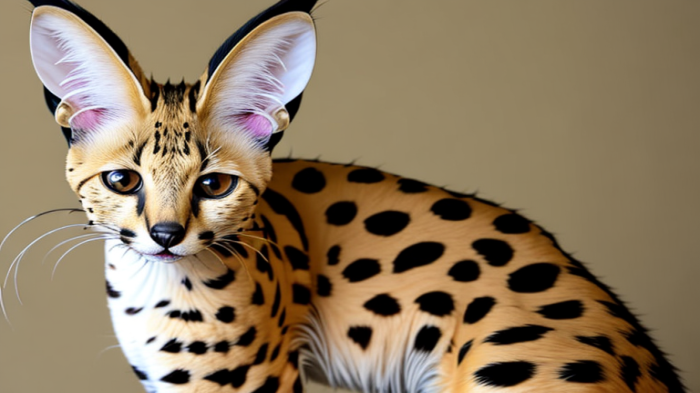
What Is a Serval Cat and Where Does It Live?
The medium-sized serval cat (Leptailurus serval) is a member of the Felidae family of cats, which also includes domestic cats, tigers, and lions.
It is the sole member of the Leptailurus genus, which in Greek means “fine or delicate cat.
The serval cat is one of the tallest cats in relation to its body size because of its long legs and slim frame. Its shoulder height is 54–62 cm (21–24 in), and its weight is 9–18 kg (20–40 lb).
Its head is tiny, its ears are huge, its coat is golden yellow to buff with black spots and stripes, and its tail is short and has a black tip.
Sub-Saharan Africa is home to serval cats, with the exception of rainforest areas. It favors environments with wetlands, marshes, and tall grasses.
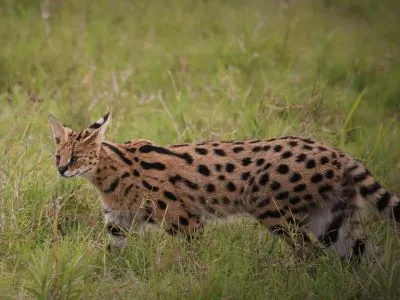
The serval cat is a solitary, territorial mammal that uses saliva and excrement to mark its territory. It is most active during dawn and dusk, although it is active during the day as well.
Purring, hissing, growling, and chirping are some of the vocalizations it uses to communicate with other servals.
Depending on their habitat, serval cats mate at various times of the year. The female gives birth to one to four kittens in a private den after a two to three month gestation period.
At one month, the kittens are weaned, and at six months, they begin to hunt. About 12 months old, they part ways with their mother. Up to ten years can pass in the wild and twenty years in captivity for serval cats.
How Dangerous Are Serval Cats to Humans and Other Animals?
Generally speaking, serval cats do not act aggressively or hostilely toward humans unless provoked or threatened.
If they perceive competition for food or territory, or if they consider humans as prey, they may attack. Their jaws and claws can cause severe wounds, leading to infections or diseases such as rabies.
Other species, especially smaller prey, are also at risk from serval cats.
They can hunt and kill tiny antelopes, hares, rabbits, chickens, ducks, and guinea fowls. Serval cats may also combat or prey on predators like jackals, leopards, cheetahs, hyenas, and wild dogs.
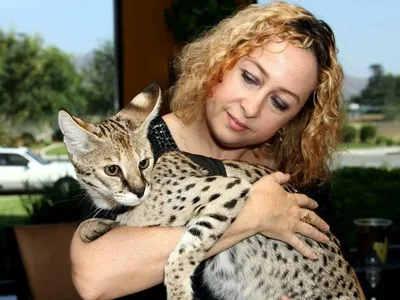
What Are the Legal and Ethical Issues of Keeping Serval Cats as Pets?
The look and behavior of serval cats fascinate some individuals, who keep them as exotic pets. But keeping a serval cat as a pet raises a number of ethical and legal questions.
First of all, in many jurisdictions in the United States, owning a serval cat without a license is prohibited; in other states, certain permissions or laws are needed. Before buying a serval cat, you should confirm your local laws as they differ from state to state.
In certain places, keeping a serval cat illegally might result in harsh consequences.
Second, since serval cats are wild animals that belong in their natural habitat, owning one as a pet is immoral. Serval cats require particular care.
Numerous issues can arise when a serval cat is kept as a pet, impacting both the owner and the feline.
Serval cats may be filthy, expensive to maintain, loud, erratic, and destructive. With their claws and fangs, they may rip up carpets, walls, doors, windows, furniture, and electrical lines.
They can mark their territory throughout the house by spraying urine and excrement. Their loud sounds, which include growls, hisses, and chirps, have the potential to annoy nearby residents.
To purchase, feed, shelter, and veterinary care, might cost thousands of dollars.
When maintained as pets, serval cats can also experience stress, boredom, frustration, sadness, and disease. They may start to exhibit aggressive, fearful, anxious, or evasive behaviors. They may have illnesses like feline.

How to Prevent or Survive a Serval Cat Attack
Preventing or surviving a serval cat attack is primarily achieved by avoiding interaction with them initially. The following advice should be followed if you come across a serval cat in the wild or in captivity:
- A serval cat should not be approached, touched, fed, or provoked. Respect its space and maintain a safe distance.
- Never turn your back on a serval cat or flee. Its hunting instinct may be triggered by this, causing it to pursue you.
- Never flash your teeth or look at a serval cat in the eyes. Either a challenge or a threat might be taken from this.
- Avoid yelling or making loud noises. A serval cat may get frightened or enraged by this.
- Avoid stooping or bending over. You may appear more fragile and smaller as a result.
- Erect yourself and project your entirebody. This can prevent an attack by a serval cat.
- Talk quietly and calmly. This will reassure a serval cat and demonstrate your non-threat status.
- Retrace your steps silently and gently. This will enable you to get away without alarming a serval cat.
- If a serval cat bites or scratches you, please get medical help. This can stop illnesses or infections.
FAQS
What precautions can be taken to prevent serval cat attacks on humans?
To prevent serval cat attacks, it’s important to avoid interactions with them, especially in the wild. People should refrain from feeding or approaching serval cats, maintain a safe distance, and follow wildlife guidelines and regulations.
Can a serval cat kill a human?
While serval cats are not typically aggressive towards humans, in rare cases, if they feel threatened or provoked, they might attack. However, fatal attacks on humans by serval cats are extremely rare.
What is the likelihood of a serval cat killing a human?
The likelihood of a serval cat killing a human is very low. These animals usually avoid humans and prefer to hunt small prey in the wild. Instances of serval cats killing humans are highly uncommon.
What should I do if I encounter a serval cat in the wild?
If you encounter a serval cat in the wild, it’s crucial to keep a safe distance, avoid any sudden movements, and slowly back away. Do not provoke or approach the animal, as this could lead to defensive behavior.
Are serval cats dangerous to humans?
Serval cats are wild animals with natural instincts. While they are not inherently dangerous, they can become aggressive if they feel threatened or cornered. It’s essential to respect their space and avoid actions that might provoke them.
Conclusion
Serval cats are beautiful and fascinating animals, but they are not suitable pets for most people. They are wild animals that need their natural environment and freedom to thrive. They are also dangerous animals that can harm humans and other animals if they feel threatened or provoked. Therefore, it is best to leave them alone and admire them from afar.
Originally posted on May 11, 2026 @ 1:56 pm